 blog
Best Streetwear for Creative Professionals: A Curated Guide
Last Updated: November 12, 2026
Quick Summary
The best streetwear for creative professionals layers a graphic tee under a structured piece, so one outfit moves from studio to client meeting. Build a capsule of three to five tees, two outer layers and clean bottoms, choosing brands whose identity matches your own.
- Fear of God was StockX's top-selling apparel brand in 2025 and second-highest in 2026.
- Sort brands into elevated basics, art-first graphic, and skate utility tiers instead of one leaderboard.
- A capsule of roughly eight to ten pieces produces more than twenty viable combinations.
- Turn tees inside out before washing and drying, and air dry when you can.
- Match the piece to your role, such as a chore coat for architects on site.
Table of Contents
- Why Creative Professionals Need a Different Kind of Streetwear
- The Best Streetwear Brands 2026: What the Rankings Reveal
- Art-Inspired Streetwear Brands and the Design Language That Sets Them Apart
- How to Style Streetwear for the Office Without Losing Your Edge
- Durability and Technical Performance: What Separates Premium from Disposable
- Capsule Wardrobe Building: A Curated Style for Creative Roles
- Choosing Pieces That Fit Your Role and Your Wardrobe
- Frequently Asked Questions
Why Creative Professionals Need a Different Kind of Streetwear
The global streetwear market is projected to hit $397.97 billion in 2026, according to Fortune Business Insights' streetwear market forecast, and that growth is being driven by buyers who want clothes that say something. If you work in a creative field, your wardrobe is part of your professional language. The best streetwear for creative professionals solves a problem most fashion guides ignore: it has to look intentional in a studio, a client meeting, and a gallery opening without changing outfits.
At Mkicrattzzi Scuvgurt, we build around a simple idea. A graphic tee should express itself plainly, not act as a billboard for someone else's logo. That principle is exactly what separates a working creative wardrobe from a pile of hype drops.
Below, we break down what the sales data actually rewards, how to style streetwear for the office, and how to build a capsule that survives real wear.
The Best Streetwear Brands 2026: What the Rankings Reveal
Sales rankings are the clearest public signal of which labels hold cultural weight, but a single top-seller does not tell a creative professional which brand actually belongs in a working wardrobe. The useful move is to read the rankings across three lenses: resale velocity, retail price tier, and construction quality.
According to Complex's 2026 streetwear power ranking, citing StockX, Fear of God was StockX's top-selling apparel brand in 2025 and the second-highest-selling apparel label in 2026. That kind of staying power matters when you are choosing pieces meant to last more than one season. But resale rank and wardrobe utility are not the same thing, and the gap between them is where most buying mistakes happen.
Reading the Rankings Like a Buyer, Not a Hype Follower
A common pattern among creative professionals is to sort brands into three practical tiers rather than one leaderboard:
- Elevated basics tier: Fear of God, John Elliott, and similar labels built on heavyweight cotton, tailored fits, and muted palettes. The value of these pieces shows up in stitch density, collar ribbing, and how the shoulder seam sits. These are the pieces that survive a client meeting.
- Art-first and graphic tier: labels whose value is the print itself rather than the logo. Price bands vary widely, but the tell is whether the graphic is dyed into the fabric or applied as a surface layer. This is where a working creative wardrobe gets its personality.
- Skate and utility tier: heritage skate brands and workwear-adjacent labels that prioritize abrasion resistance and relaxed cuts. These hold up to studio days and travel better than luxury knits, and they cost less to replace.
What the Sales Data Says About Brand Identity
Rankings reward identity, not just logo recognition. A 2015 study on streetwear brand dimensions found that successful streetwear labels attract customer attention and devotion through distinct brand identity rather than volume. That is the opposite of the mass-market model, and it is why limited edition drops keep outperforming.
For a creative professional, that finding has a practical translation: the brand's identity should overlap with your own professional identity. A designer whose work is restrained will look off in a loud all-over print, and a film producer who dresses in head-to-toe minimalism can read as underdressed on a set. The ranking tells you who has cultural heat; the identity match tells you who has staying power in your closet.
Watch out: resale rank is not a complete picture. Check fabric weight and return policy before treating a ranking as a buying recommendation.
Art-Inspired Streetwear Brands and the Design Language That Sets Them Apart
Art-inspired streetwear brands treat the garment as a canvas with a point of view, not a blank surface for a logo. The design language is what you are actually buying.
Look at the content of a graphic tee: the characters, what they are doing, and the words and what they mean. Ask whether a shirt is an advertising billboard for a brand you paid for, or something that expresses itself plainly. That single question filters out most of what is on the market.
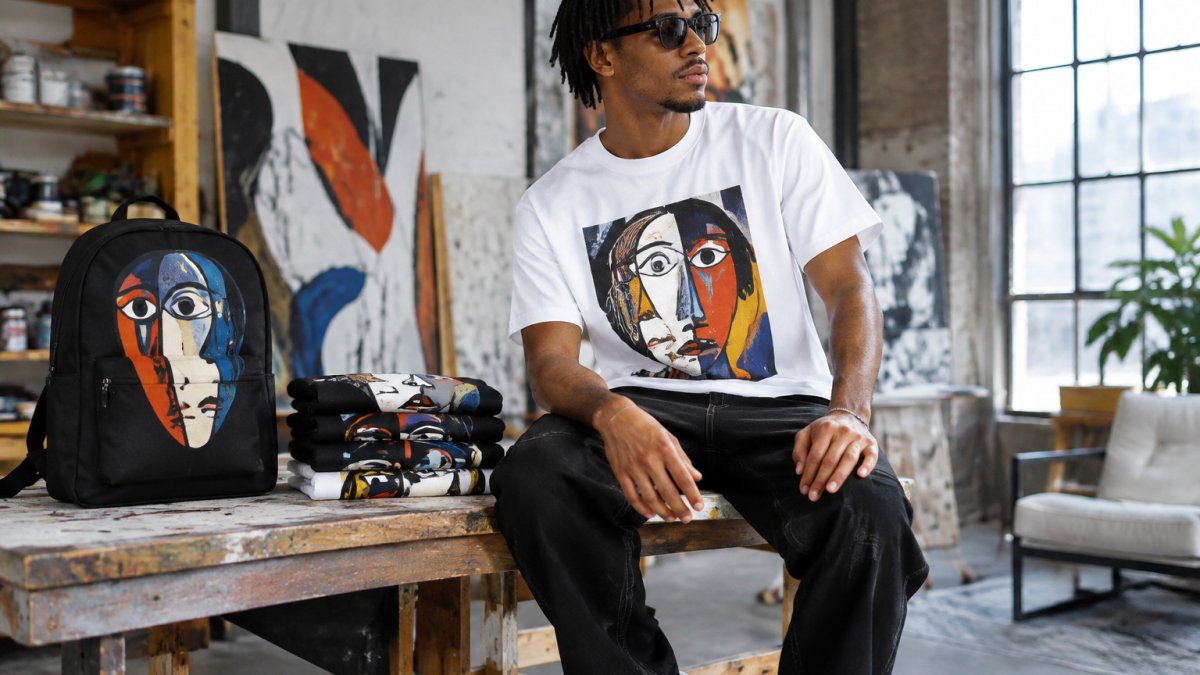
Our own approach leans understated and unexpected. The color scheme will not make you stand out like a sore thumb at first glance, and the design reveals itself on closer inspection. Each design forms its own language. If you want to see how that reads in person, you can shop Mkicrattzzi streetwear, stickers, art prints, bags and home decor.
Highsnobiety's 2026 streetwear roundup shows the same tension playing out across luxury labels, skatewear, and established names, which tells you the art-first angle is a durable position rather than a trend.
How to Style Streetwear for the Office Without Losing Your Edge
The best streetwear for creative professionals works because it layers, not because it shouts. Start with a graphic tee as the base, add a structured layer, and keep the bottom half clean. That formula carries you from a studio day to a client meeting with one swap.

Studio Days vs. Client Meetings: Building Versatile Layering
Studio days forgive almost anything. Client meetings do not. The difference is structure:
- Studio days: graphic tee, relaxed denim or wide-leg trousers, a hoodie within reach
- Client meetings: the same tee under a blazer or overshirt, tapered trousers, clean sneakers
- Events: add a windbreaker or statement outer layer and let the print carry the look
Versatile layering is the whole trick. One well-chosen tee does three jobs.
Durability and Technical Performance: What Separates Premium from Disposable
Premium streetwear costs more because of fabric quality, manufacturer cost, and limited-edition prints.
Our print technique is DTF or DTG via sublimation, and the fabric itself is dyed with the print for the most part.
Care matters too. Turn the t-shirt inside out before washing and before drying in the dryer. Air drying is recommended, though it may not be time efficient for most people.
Capsule Wardrobe Building: A Curated Style for Creative Roles
A capsule wardrobe is a small set of pieces that all work together, chosen so every item earns its place. For creative roles, that means three to five graphic tees, two outer layers, and bottoms that read clean in any room.
Build it around aesthetic cohesion. Pick a color scheme first, then let each print add one unexpected detail. A curated style beats a large closet because you stop making decisions in the morning. You can explore the full range of streetwear, art prints and accessories to see how the pieces sit together before you commit.
Watch out: buying five loud statement pieces at once usually produces a wardrobe with nothing to wear on a normal Tuesday.
Choosing Pieces That Fit Your Role and Your Wardrobe
Match the piece to the job, not to the hype. Creative roles differ enough that the same graphic tee can read correctly on one person and wrong on another, so what a graphic designer needs from a wardrobe is not what an architect or a film producer needs.
Role-by-Role: What Actually Works
| Role | Best Pick | Why It Works | Watch For |
|---|---|---|---|
| Graphic designer, studio-based | Graphic tee plus overshirt | Print shows, comfort holds through long screen sessions | Overshirt should be mid-weight; thin ones pill at the cuff |
| Architect, site and studio | Utility pant, plain heavyweight tee, chore coat | Reads clean in client presentations, survives site visits | Avoid loose cuffs near models and materials |
| Film producer, on set | Layered tee under a packable windbreaker | Handles location temperature swings and long days | Darker prints hide equipment dust and cable grime |
| Art director, events and openings | Statement outer layer over understated tee | The layer carries the look; the tee keeps it wearable | One statement piece per outfit, not two |
| Freelancer, client-facing | Understated graphic tee, tapered trouser, clean sneaker | Reads intentional rather than loud in a first meeting | Skip distressed denim for finance and legal clients |
The Capsule Mechanics Behind the Table
The table only works if the pieces overlap. A practical capsule for a creative professional is built in three layers:
- Base layer (3-5 pieces): graphic tees in a single color family. If the tees share a palette, every outer layer works with every base.
- Structure layer (2 pieces): one soft layer (overshirt or hoodie) and one hard layer (blazer, chore coat, or windbreaker). The hard layer is what converts a studio outfit into a client-meeting outfit.
- Bottom layer (2-3 pieces): one clean tapered trouser, one relaxed wide-leg, and one utility option if your role involves site or set work.
That is roughly eight to ten pieces that produce more than twenty viable combinations. The math is the point: a curated style beats a large closet because you stop making decisions in the morning, and every piece has at least three jobs.
Durability and Travel: The Part Most Guides Skip
Creative professionals tend to travel, work long hours, and move between environments in a single day, which puts a premium on fabric performance.
For daily wear, the Cannabreaker windbreaker suits a creative professional well. It reads very current and subtle but wild, which is exactly the balance a working wardrobe needs.
Watch out: buying five loud statement pieces at once usually produces a wardrobe with nothing to wear on a normal Tuesday. Build the base layer first, then add one statement layer per season.
Your wardrobe should work as hard as your portfolio does. Mkicrattzzi Scuvgurt builds premium tees and outerwear with prints that do not crack, fabric dyed with the design, and limited-edition runs you will not see on everyone else. Browse the shop and find the pieces that fit how you actually work.
Frequently Asked Questions
What are the best quality streetwear brands for daily wear?
Quality for daily wear comes down to fabric weight, print technique, and construction. Look for shirts made with DTF or DTG printing via sublimation, where the dye bonds with the fabric rather than sitting on top as a paint layer. This prevents cracking when the jersey stretches. At Mkicrattzzi Scuvgurt, we turn tees inside out before washing and recommend air drying to extend the life of the print. Premium fabrics and limited-edition prints also factor into the price, reflecting a garment built to last rather than a disposable graphic.
How do creative professionals balance streetwear with professional office attire?
The key is versatile layering and aesthetic cohesion. Start with a minimalist streetwear base, like a well-fitted graphic tee or a clean hoodie, and pair it with tailored silhouettes such as structured trousers or a blazer. Keep the color scheme understated so the graphic becomes a deliberate detail rather than a distraction. For client meetings, choose pieces with subtle visual storytelling, like a design that reveals itself on closer inspection, rather than loud logos. This approach lets you maintain a creative edge while staying work-appropriate.
What should I look for when buying premium streetwear for work?
Check three things: garment construction, textile quality, and design philosophy. Look at the content of the graphic, the characters, and what they mean, and ask whether the shirt is an advertising billboard for a brand you paid for or something that expresses itself plainly. Examine the print technique. If a shop applies a layer of paint over stretchy jersey, it will crack. DTF or DTG via sublimation bonds the dye to the fabric, so the print lasts as long as the shirt. Finally, consider limited-edition prints, which ensure your piece is not mass-produced.
Which streetwear brands feature original art and geometric designs?
Brands that prioritize artistic collaboration and visual storytelling stand out. Fear of God was ranked by StockX as a top-selling apparel brand, but for original art and geometric patterns, look to independent labels that treat each design as its own language. Mkicrattzzi Scuvgurt creates art-inspired streetwear where designs play on the understated and unexpected, using geometric patterns and animal-themed graphics. Some designs are one of a kind, and the print is not reused on other products, making them limited edition by nature.